
Layer 01
Scientific Evidence
Institutional environmental and geospatial sources become longitudinal histories under explicit data contracts.
Environmental Risk
Intelligence Platform
A completed environmental risk intelligence system that transforms institutional environmental and geospatial evidence into governed, reproducible intelligence for healthcare and insurance evaluation.
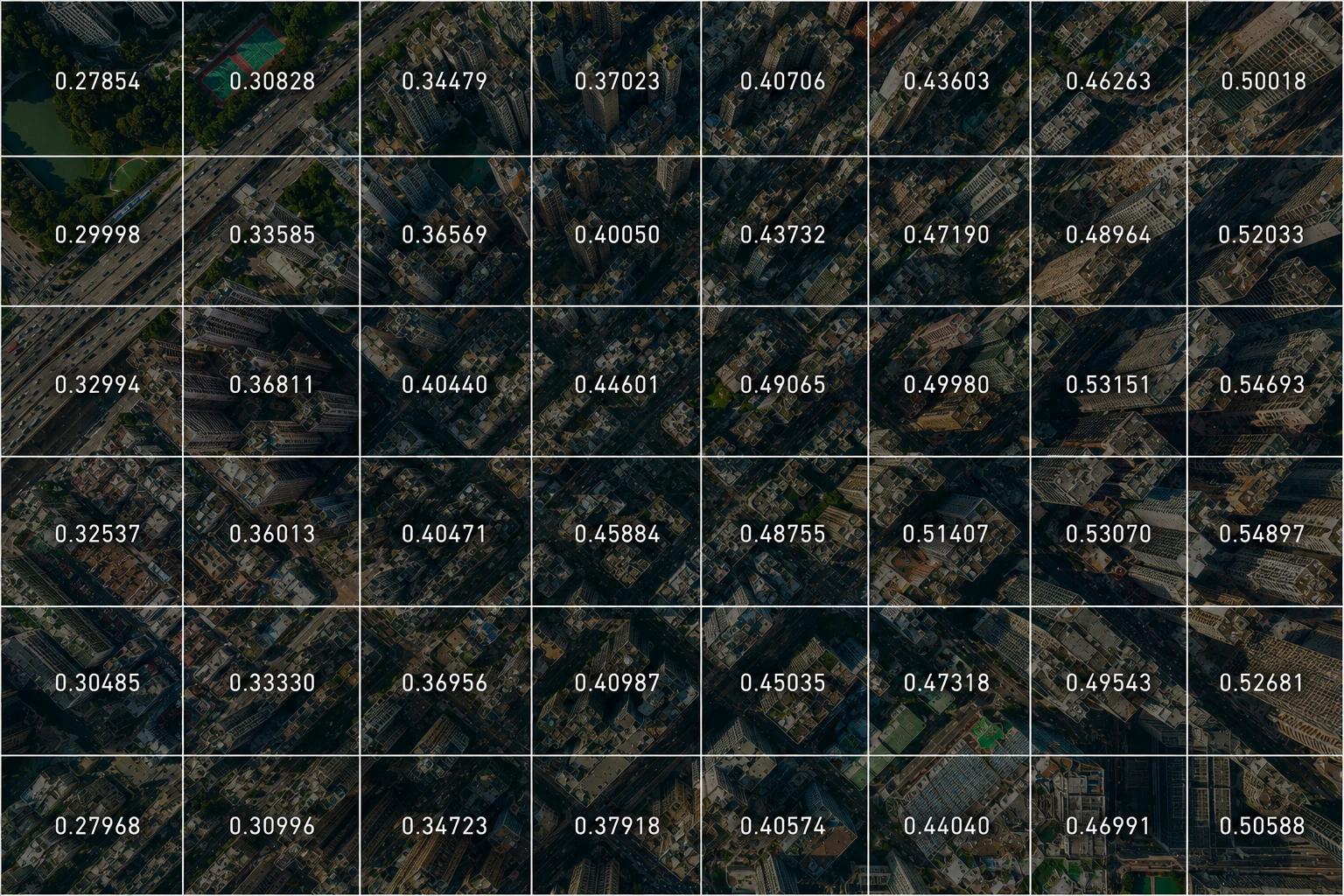
Fig. 01 — Opening field
01 / The Problem
Healthcare and insurance models already contain conventional claims, demographic, socioeconomic and property variables.
Environmental evidence is different — fragmented across scientific datasets, inconsistent in space and time, computationally expensive, and difficult to audit.
The problem was not simply to create a score.
The problem was to make environmental evidence reproducible enough to survive validation.
02 / What Atlas Is
ATLAS is not positioned as a replacement for an insurer’s actuarial model. It is an additional environmental covariate designed to be tested inside existing models — with value demonstrated through reproducible validation rather than marketing claims.
01
Institutional environmental and geospatial evidence assembled into longitudinal environmental histories.
02
Version-controlled normalization and governed environmental intelligence with reproducible releases.
03
Canonical spatial representation with controlled local context and population-aware geographic aggregation.
04
Honest validation across positive and negative results, with integrity and quality gates before release.
ATLAS represents environmental burden across time scales and geographic contexts. It combines broad environmental conditions with controlled place-based context to produce consistent, explainable risk intelligence. Feature engineering, normalization, and scoring methodology remain proprietary.

03 / My Role
Technical Lead / Lead Developer
Led technical execution across environmental-data engineering, geospatial computation, cloud architecture, governed pipelines, validation workflows and production quality.
Translated scientific and actuarial requirements into system boundaries, contracts, and governed workflows.
Built large-scale evidence processing, governed releases, cloud delivery, and national-scale execution.
Developed reproducible healthcare and property-validation workflows while preserving locked methodology after results were known.
04 / System Architecture
ATLAS separates scientific evidence, governed intelligence, contextual evaluation, and validation delivery — without exposing the proprietary transformation recipe between them.
01
Institutional environmental and geospatial sources become longitudinal histories under explicit data contracts.
02
Version-controlled normalization produces governed environmental intelligence released reproducibly.
03
Canonical spatial representation and controlled local context support consistent evaluation without false precision.
04
Each release passes integrity and quality gates before healthcare and property evaluation.
05 / Environmental Intelligence
ATLAS represents environmental burden across time scales and geographic contexts. It combines broad environmental conditions with controlled place-based context to produce consistent, explainable risk intelligence. Feature engineering, normalization, and scoring methodology remain proprietary.
01
Chronic and acute environmental stressors represented across longitudinal histories.
02
Consistent interpretation from broad territories to specific locations.
03
Bounded place-based context without inventing false atmospheric precision.
04
Governed environmental intelligence that can be released reproducibly.
05
An environmental covariate designed for evaluation inside existing models.
06
Feature engineering, normalization and scoring methodology remain confidential.
Broad environmental conditions matter. Controlled local context matters. Neither requires publishing the proprietary scoring recipe.
06 / Local Context
Regional conditions do not fully describe how exposure varies between places. ATLAS incorporates bounded local context while preserving the integrity of the broader scientific signal.
Broader Scientific Signal
Regional environmental conditions form the broader scientific signal.
Controlled Local Context
Bounded context from the surrounding physical and built environment — without enumerating proprietary variables.
Localization adds context.
It does not invent atmospheric precision.

07 / Resolution
ATLAS supports consistent interpretation across portfolio, territory, site, and location contexts. Resolution is governed by evidence quality and application needs.
Portfolio · Territory · Site · Location
08 / Production Engineering
ATLAS transforms heterogeneous scientific evidence through a governed, version-controlled system. Each release passes defined integrity, consistency, and reproducibility gates before downstream evaluation.
01
Heterogeneous scientific evidence acquired under versioned contracts.
02
Environmental intelligence produced through a governed, version-controlled system.
03
Controlled place-based context evaluated alongside broader environmental conditions.
04
Each release passes integrity, consistency, and reproducibility gates before downstream evaluation.
09 / Validation
In a held-out county-level study, adding ATLAS to a locked conventional baseline produced measurable explanatory improvement. The methodology was not retuned after results were known.
This did not establish causality, universal performance, or production actuarial readiness.
A later prospective ACO study produced only marginal improvement. ATLAS coefficients were not statistically distinguishable from zero.
The signal did not generalize strongly to the more demanding prospective design.
We did not retune the methodology after seeing the result.
10 / Property Workstream
A bounded property-scale evaluation exercised the complete controlled workflow—from governed evidence through geographic aggregation to release verification—within documented system scope.
11 / Demo
12 / Governance
In high-stakes risk systems, provenance and honesty are as important as predictive signal.
Trust Principles
Inputs and releases remain attributable across time.
The same governed release can be reconstructed from recorded evidence.
Downstream evaluation points to a known, attributable release.
Integrity and consistency checks must pass before delivery.
Positive and negative results are disclosed without retuning methodology after the fact.
13 / Trade-offs
Preserve broader scientific signals. Add controlled local context. Do not manufacture false precision.
Prefer incremental large-scale processing over needless full recomputation while keeping governed results stable.
Retain coverage and sensitivity analysis rather than silently inventing missing values.
Support versioned evidence and governed updates when upstream scientific inputs change.
Preserve locked methods when later validation is weaker.
14 / Technical Delivery
Core capabilities implemented within documented scope — from governed evidence through validation workflows to release controls.
Governed Evidence Acquisition
Heterogeneous scientific sources acquired under versioned contracts with explicit provenance and attribution.
Reproducible Intelligence Pipeline
Version-controlled normalization produces governed environmental intelligence that can be released and reconstructed reproducibly.
Geographic Evaluation
Canonical spatial representation with controlled local context and population-aware aggregation across operational contexts.
Healthcare Validation Workflow
Locked-baseline Medicare and ACO study designs with immutable validation records and honest reporting of weak findings.
Property Evaluation Workflow
Bounded property-scale evaluation through the complete controlled workflow from evidence to release verification.
Integrity and Release Controls
Defined integrity, consistency, and reproducibility gates before any release reaches downstream evaluation.
15 / Technology
Public capability categories only. The complete scientific-source and tooling combination used to construct proprietary representations is not published here.
Large-scale scientific data engineering and reproducible analysis.
Governed cloud delivery for national-scale environmental workloads.
Canonical spatial representation and geographic evaluation at multiple contexts.
Locked-baseline healthcare and property validation designs.
Versioned evidence, quality gates, and attributable releases.
16 / Reflection
Building a sophisticated score
is only part of the problem.
In risk systems, provenance, reproducibility, data contracts and validation can be as important as the model itself.
ATLAS reinforced that technical leadership in high-stakes data systems means preserving evidence, controlling methodology, exposing uncertainty and being willing to report when results weaken.
Case / 003
ATLAS
Case Study 004
Next SystemHave a reason to talk?
zaidduartee@gmail.com ↗